
Last updated November 17, 2026
 Sliding glass doors
 Single hung
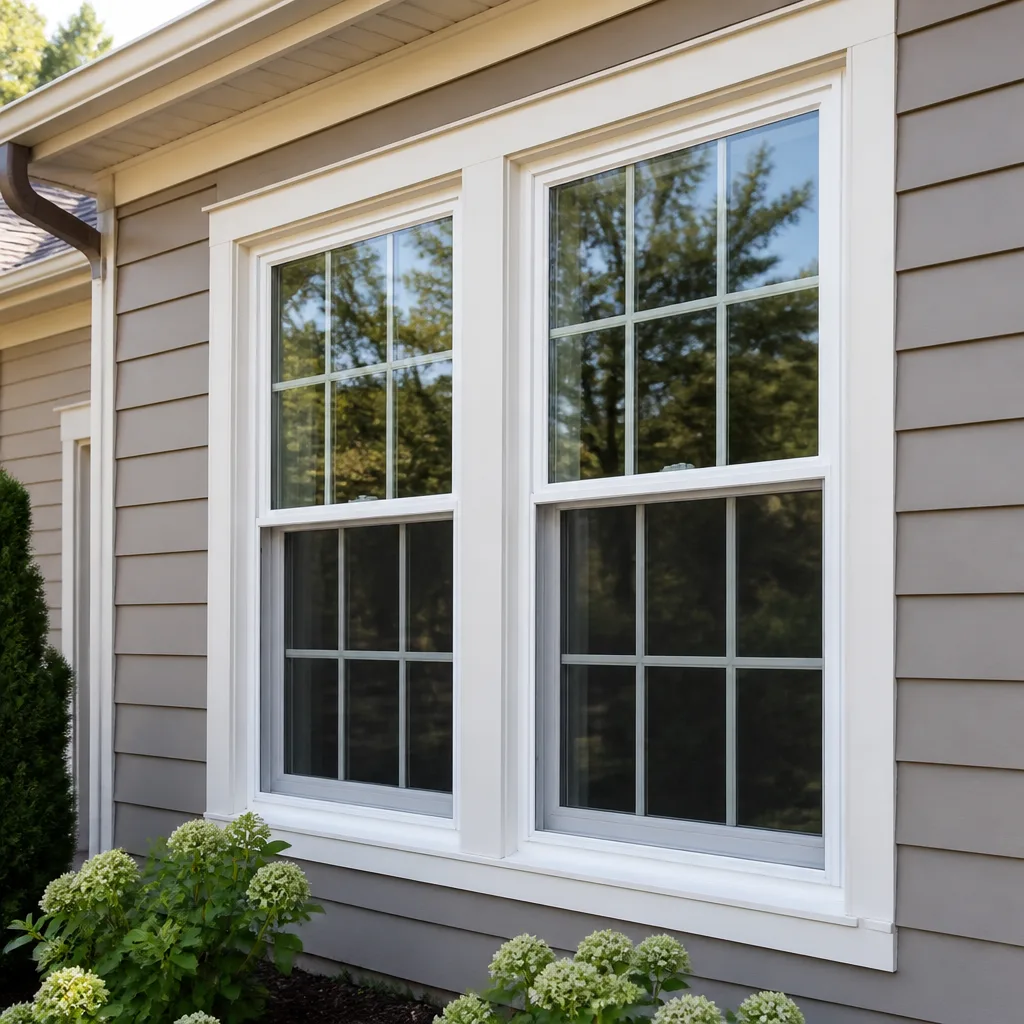 Double hung
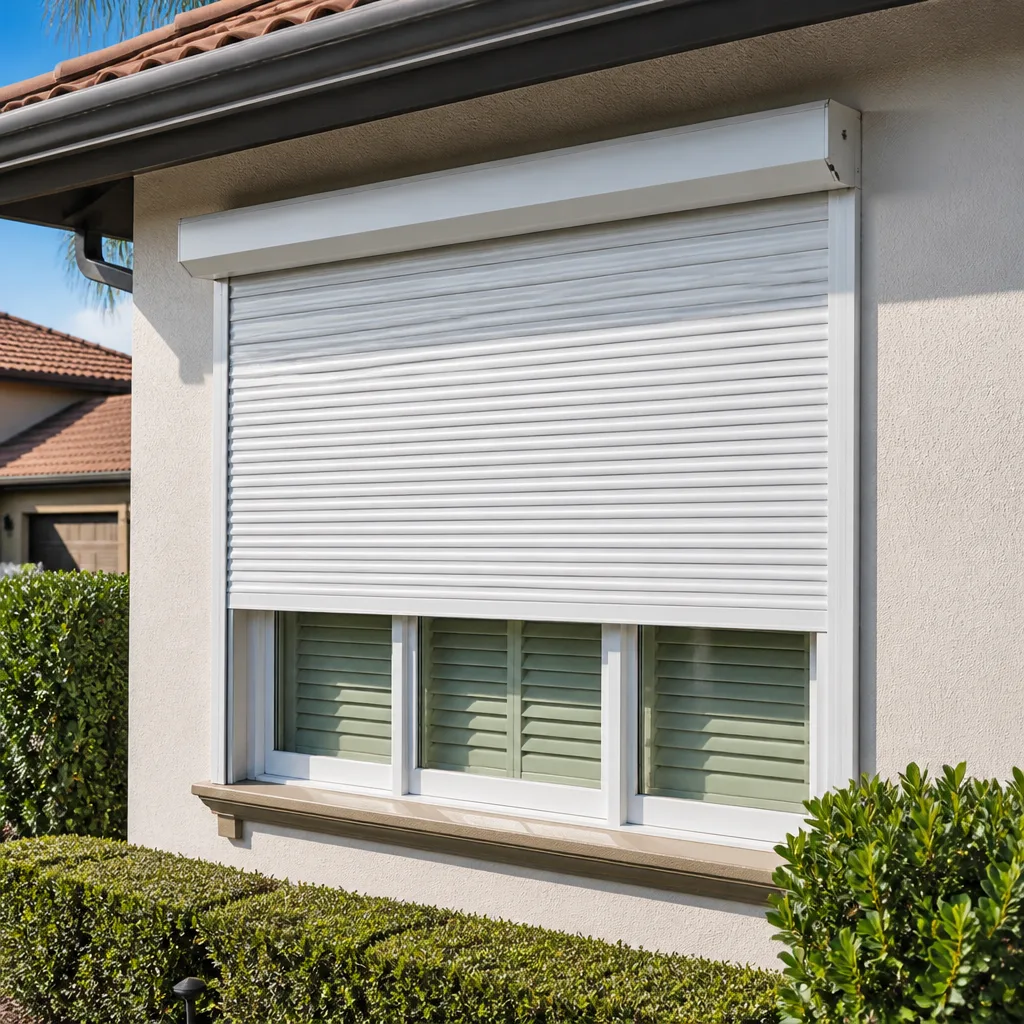 Horizontal roller
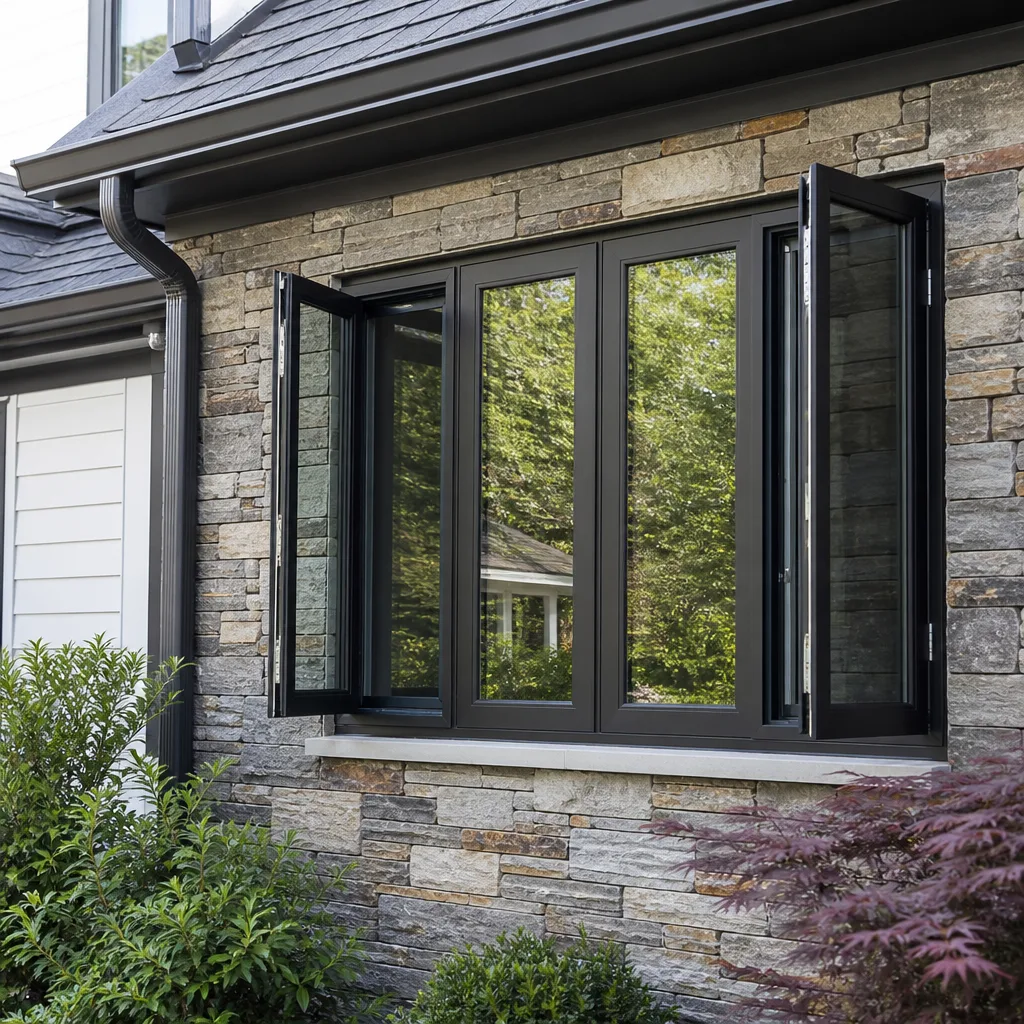 Casement
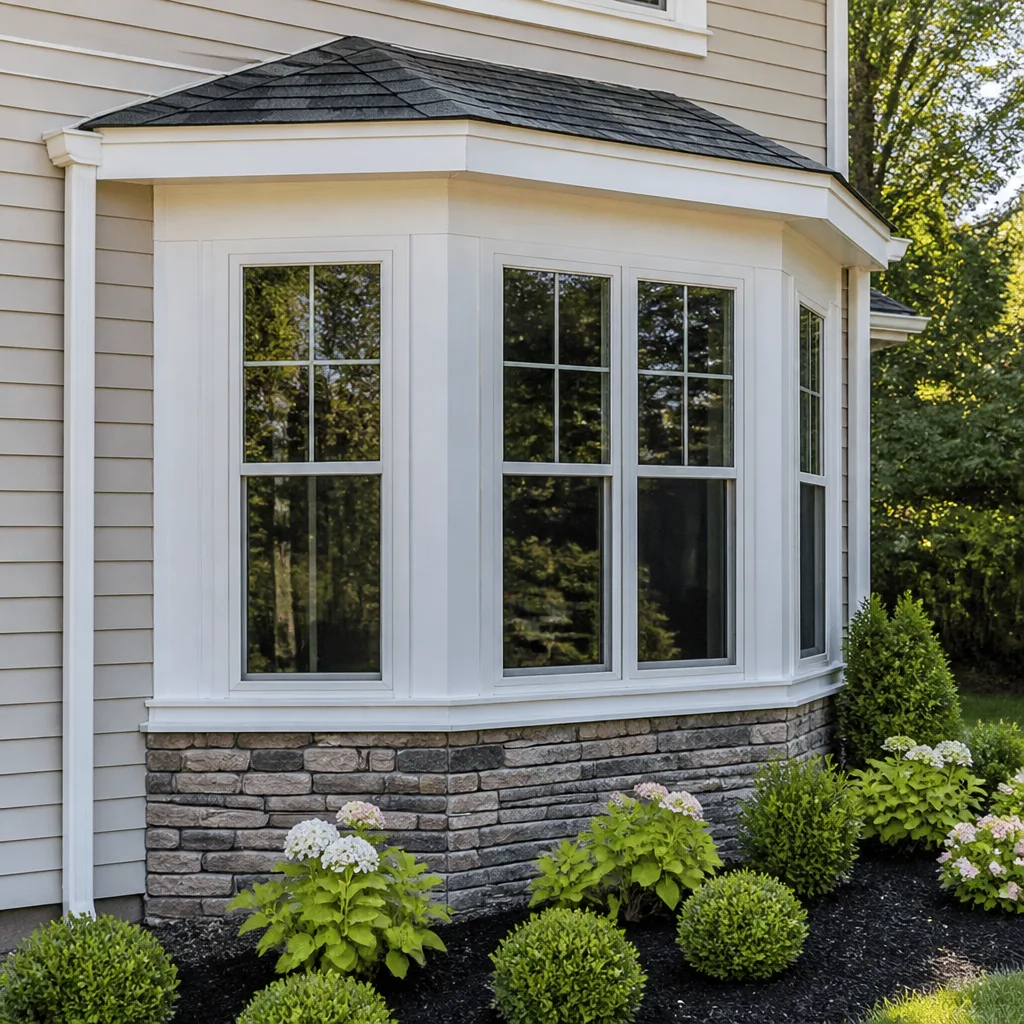 Bay & bow
 Entry doors
 Impact garage doors
 PGT
 CGI
Free in-home measure and quote - PGT, CGI and CWS impact lines compared on your actual openings, style by style
Get your free estimateSeasonal Windows & Doors Care for Sunrise Manor: Year-Round Homeowner’s Guide
Sunrise Manor’s “mild winter” still swings 50°F between a January night and a February afternoon – and that thermal cycling is the primary driver of door frame warping that homeowners mistakenly blame on product quality. The same goes for cracked sealant around window frames that people write off as cheap materials. In most cases it’s not the product. It’s the calendar. Sunrise Manor doesn’t run on the four-season maintenance rhythm you’ll read in every national window care guide. It runs on three distinct stress periods: pre-monsoon heat buildup, monsoon infiltration season, and winter thermal shock. Each one asks different tasks of your windows and doors, and missing any of them shortens the life of glass, seals, hardware and frames. This guide walks through all four phases in order, month by month, with the specific checks that actually matter in Sunrise Manor.
Quick Answer
Seasonal window and door care in Sunrise Manor runs on three stress periods, not four seasons: pre-monsoon sealing and weep-hole clearing in May and June, active leak monitoring through the July-to-September monsoon, and a post-monsoon frame-and-hardware reset in October before winter thermal cycling sets in. The single task most homeowners skip is inspecting UV ratings on decorative door glass inserts in spring, which prevents premature delamination that no sealant will fix once it starts.
Styles & brands we work with
- Single hung
- Double hung
- Horizontal roller
- Casement
- Bay & bow
- Sliding glass doors
- Entry doors
- Impact garage doors
- PGT
- CGI
Table of Contents
- Why Sunrise Manor Has Three Stress Periods, Not Four Seasons
- Spring Checklist: UV Ratings and Door Glass Inserts
- Pre-Monsoon Prep (May – June): Sealing Thresholds, Clearing Weep Holes
- Monsoon Season (July – September): Spotting Infiltration Early
- Post-Monsoon Reset (October): Frame Integrity and Hardware
- Winter Thermal Cycling (December – February): Checking Sealant Safely
- A One-Page Yearly Plan for Sunrise Manor Homeowners
Why Sunrise Manor Has Three Stress Periods, Not Four Seasons
Sunrise Manor sits in a pocket of the Las Vegas Valley where the seasonal load on windows and doors behaves unlike almost anywhere else in the country. Spring dries out fast, with weeks of low humidity and hard afternoon sun that bake sealant lines from the outside in. Then July hits and the monsoon rolls in, dumping a summer’s worth of rain on frames and thresholds that have spent nine dry months shrinking. Winter is the punch line: it looks mild on paper but swings 40 to 50 degrees between a cold predawn and a warm afternoon, and those swings cycle the thermal expansion of aluminum-clad frames and door slabs thousands of times across a season.
What that means in practice is that your windows and doors in Sunrise Manor don’t get a “resting” season. The stress period just moves. A generic guide that tells you to “check seals in fall and clean gutters in spring” misses the actual sequence here:
- Dry-heat buildup (roughly March through June): UV exposure, low humidity, sealant shrinking, weep-hole debris.
- Monsoon (July through September): wind-driven rain, thresholds under standing water, hidden infiltration behind stucco.
- Winter thermal cycling (December through February): repeated expansion and contraction, sealant separation, frame warping, hardware loosening.
The homeowners we work with in Sunrise Manor who get long life out of their windows and doors usually aren’t doing anything exotic. They’re just doing the right task at the right point in that cycle. The rest of this guide is that schedule, phase by phase.
Spring Checklist: UV Ratings and Door Glass Inserts
The single spring task most Sunrise Manor homeowners skip is inspecting the UV rating stamped on their decorative door glass inserts. That’s a mistake that costs real money. Decorative glass panels – the leaded, patterned or textured inserts in entry and patio doors – are laminated with an interlayer that holds the glass together and carries the UV protection. When that interlayer is exposed to unfiltered desert sun year after year, the panel doesn’t crack or shatter. It delaminates. The laminate haze appears around the edges first, the panel starts to look milky or yellowed, and by the time it’s obvious the insert has to be replaced, not repaired.
Spring is when you’re most likely to spot it, because the sun angle shifts low enough to catch the edge of the panel. Here’s what the check actually looks like:
- Check the glass stamp. Every manufactured window and door should carry an insulating-glass or safety-glass stamp in the corner with the UV and safety markings. Note the model and manufacturer so a replacement matches.
- Look for edge haze. Hold a flashlight at a low angle against the insert and look at the edges. A clean panel looks crisp. A delaminating panel looks cloudy around the border.
- Check for color shift. Yellowing, milky white, or a faint pattern of shrinking laminate lines is an early warning sign, not just an aesthetic quirk.
- Check frames for dark streaks. Water tracking behind the insert means the seal has already opened, and the panel is getting wet as well as UV-loaded.
While you’re at it, log the brand and model of your windows and doors so you know what you’re dealing with. Sunrise Manor homes built across several decades carry a mix of brands, and if you have windows from CGI, CWS or ES Windows installed, that manufacturer information should be readable on the stamp. If you can’t read it, a technician can look it up before any hardware needs replacing. If inspection shows the inserts are already hazed, replacement is the answer – and that’s exactly the kind of work covered on our window replacement in Sunrise Manor page.
Pre-Monsoon Prep (May – June): Sealing Thresholds, Clearing Weep Holes
Pre-monsoon prep is the most important window and door maintenance you’ll do all year in Sunrise Manor, and it happens in the six weeks before the first real storm. The reason is simple: after months of dry heat, every sealant line on your home has shrunk, dried and pulled back from the material it was meant to protect. Water doesn’t ease in gradually. The first storm of the season finds the smallest gap and drives through it with wind pressure behind it.
Two components take almost all of that load. Sliding door and entry door thresholds, and window weep holes.
Threshold sealing
Every exterior door in your home sits on a threshold with a few predictable failure points: the sill gasket under the door slab, the corners where the frame meets the sill, and the transition between the sill and the surrounding floor. Check each one before the first storm:
- Door sweep and sill gasket: the gasket should compress against the bottom of the door when closed. If it’s flat, brittle or missing pieces, replace it before the rains.
- Threshold sill plate: check that the sill is positively sloped to drain water outward, not pooled in the track. Standing water in a sliding door track should drain through the weep holes by design.
- Corner sealant: look for open seams where the stile meets the sill. A thin bead of exterior-grade polyurethane sealant on a dry, clean joint will hold through a monsoon; cheap silicone often won’t.
Weep-hole clearing
Every sliding window and many sliding doors have small weep holes along the bottom track that let water drain out when wind drives it past the weatherstripping. Nine months of desert dust, spider webs and fine grit plug them up. A plugged weep hole turns a small infiltration into a pond in your track.
- Locate every weep hole. On sliding windows and doors they’re usually on the exterior side of the bottom track, every 12 to 18 inches.
- Clear with a soft tool. A toothpick, a soft brush or a shop-vac nozzle is enough. Don’t use a nail or a screwdriver, which can widen the hole or crack the track.
- Flush the track. Pour a small amount of water into the track and watch it drain out the exterior weep holes. If it pools, keep clearing.
- Check the operating panel weatherstripping. Any weatherstripping that’s torn, flattened or peeling off should be replaced before monsoon season, not during it.
If you’re not sure what state your windows are in before the season, our window installation in Sunrise Manor team can check weep holes, drain paths and weatherstripping in a single visit, and give you a written recommendation on what needs to be done now versus what can wait until fall.
Monsoon Season (July – September): Spotting Infiltration Early
Monsoon season is when the real damage happens quietly. The storm itself is loud and visible, but the actual loss of value in your windows and doors is what water does behind the drywall, under the floor and inside the frame cavity after the storm passes. The key skill is learning to spot active infiltration early, while it’s still a small fix, and to tell the difference between a temporary answer and a professional assessment before the next storm is already on radar.
How to spot infiltration early
- Water marks on drywall below or beside a window or door. Look for faint rings, ripple marks or paint bubbling on the interior wall near the frame. These often appear 24 to 72 hours after a storm, not during it.
- Discolored baseboards or trim. If the baseboard near an exterior door swells or darkens, that’s water tracking from the threshold up into the wall.
- Standing water in the track after a storm. A window or door that holds water for hours after the rain stops has a plugged weep hole or a failing drain path.
- Dampness or musty smell near a window well or floor. Especially in older Sunrise Manor homes where slab transitions vary, moisture can travel under flooring before it shows anywhere obvious.
- Peeling exterior sealant on the frame. Once the sealant peels, it’s no longer shedding water, and the frame ends up absorbing it.
What’s a temporary fix, and what isn’t
A temporary fix is anything that holds for one or two more storms while you schedule a real repair. Fresh sealant on a clean, dry exterior joint, a fresh bead around the frame perimeter, or a replaced door sweep will typically get you through the rest of the season. What a temporary fix can’t do is fix an active leak behind the frame cavity, a warped sill that’s no longer sloped to drain, or water that’s already reached the interior wall. Anything in that second group is a professional assessment before the next storm, not a caulk-and-pray situation.
If you’re seeing recurring leaks in the same window after three or four seasons, that’s the signal that the window itself is beyond adjustment. Our impact windows in Sunrise Manor page covers the upgrade path for homes where the existing unit is the actual problem.
Post-Monsoon Reset (October): Frame Integrity and Hardware
October is the best window and door maintenance window of the year in Sunrise Manor, and it’s the one season most homeowners miss entirely. The monsoon is over, the cooling has started, and the interior and exterior temperature difference across the frame is still mild enough to work around the home without fighting the heat. This is when a frame assessment actually means something, because the frame is stable and the sealant has just been stressed by a full season of weather.
How to check frame integrity
- Walk and look. From outside, look down the length of each window frame and door frame at a low angle. A frame that’s plumb and square looks like a straight line. A frame that’s starting to shift shows a bow or a gap at one end.
- Check the frame-to-wall joint. The joint between frame and stucco or frame and siding should be a continuous sealant line, not a series of intermittent beads. Any visible gap is a place for water next season.
- Check each corner of each frame. Corner joints on vinyl and aluminum frames are the first spots to show separation when the frame has taken water or thermal movement.
- Open and close every operating window and door. A window that used to glide smoothly and now binds is telling you the frame has moved. A door that used to latch cleanly and now requires a lift is the same story.
Hardware adjustments to schedule in October
- Door hinges: a sticking or dragging door is usually a hinge adjustment, not a replacement. Getting this done in October means it’s done before the thermal cycling starts.
- Sliding door rollers: if the panel rolls hard or jumps in the track, the rollers are worn. Replacing them is a small job in October and a much bigger job when the panel jumps the track in February.
- Multi-point lock alignment: on entry and patio doors, the lock points should engage smoothly with the door closed. Misalignment in October is an early sign the frame has shifted.
- Lift-and-slide door hardware: check the lift and slide mechanism; worn hardware causes water infiltration past the panel during the next monsoon.
If a frame is actually failing – bowed, waterlogged or beyond adjustment – this is the month to schedule the fix before winter makes the disruption worse. Our window replacement in Sunrise Manor team can give you a written assessment with a clear line-item quote before any work is scheduled. The same timeline applies to doors: if the slab or frame is beyond adjustment, a replacement is the practical answer and October is the right month to plan it. Sunrise Manor homes with Therma-Tru entry systems or CGI sliders can often have the hardware refreshed without replacing the whole unit, which is the more cost-effective route when the frame is still sound.
Winter Thermal Cycling (December – February): Checking Sealant Safely
Winter in Sunrise Manor looks mild, but the day-to-night swing is exactly what drives sealant separation on aluminum-clad frames. Aluminum expands and contracts with temperature at about twice the rate of glass, and every cold night and warm afternoon cycles that movement through the sealant joints. After a season of that, the sealant at frame corners and the interior joint between frame and wall is where it shows up first. Checking for it is a simple job, but doing it with the wrong tool is worse than not doing it at all.
How to check sealant on aluminum-clad frames safely
- Pick a mild afternoon. You want a day when the frame is neither at its coldest nor at its hottest, so the sealant is at mid-flex and any crack shows honestly. Late morning is usually best.
- Look with a flashlight at a low angle. Hold the light against the frame corner and look along the sealant line. Cracks, separation and voids are visible this way. Don’t run a blade or a screwdriver along the sealant to “find” cracks; you’ll cut the sealant you’re trying to test.
- Press gently with your fingertip. A sealant that’s still doing its job flexes back. One that’s failed will crumble or pull away when you press it lightly.
- Check interior and exterior separately. A failed exterior bead is exposed to weather. An interior bead separated from the wall is a place where cold air is tracking into the home.
- Note, don’t scrape. Note every failed location on a list before you touch it. Then re-seal on a dry, mild day with a sealant rated for aluminum-clad frames.
What not to use
Avoid anything with aggressive adhesion that will pull the paint off the frame – and avoid hard-tool scraping at frame corners. Aluminum-clad frames have a thin coating that’s easy to scratch, and a scratched coating is an entry point for corrosion. If you don’t have the right tools or aren’t confident doing it safely, a technician can check and re-seal the joints correctly on one visit. Considering the very small cost of an assessment compared to the cost of an overlooked frame, it’s the better trade. If sealant separation keeps coming back in the same spots year after year, the frame is telling you it’s beyond re-sealing, and that’s when a replacement conversation makes sense. You’ll find more on that path in our window installation in Sunrise Manor guide.
A One-Page Yearly Plan for Sunrise Manor Homeowners
Here’s the whole cycle in one place, written to be pinned up or saved. Every task is short. None of them require power tools. All of them are on the same day each year, which is the real trick.
- March: Spring UV inspection on door glass inserts. Flashlight-check each decorative panel edge for haze or color shift. Log the model and manufacturer.
- April: Door hardware check – hinges, sweeps, weatherstripping. Replace anything that’s torn or flattened.
- May: Threshold sealing and weep-hole clearing. Start with the sliding patio door on the south and west side of the house, which take the most sun and wind. Clear every weep hole and flush the tracks.
- June: Exterior sealant check around every window and door frame. Re-seal any joint that’s cracked or pulled back.
- July through September: After each major storm, look for interior water marks near windows and doors. If you see them, note the location and call for an assessment before the next storm is on radar.
- October: Frame integrity check and hardware adjustments. Open and close every window and door. Schedule anything that binds, drags or leaks.
- November: Pre-winter re-seal on aluminum-clad frames. This is the last chance to seal the joints before thermal cycling begins in December.
- December through February: Monthly walk-around. Flashlight-check the frame corners and interior sealant lines. Note anything that has separated.
Every one of these tasks is a few minutes. The compound effect is a window and door system that stays watertight, operates correctly and preserves its insulating performance through the Sunrise Manor climate. That’s what preserves the investment.
Common Mistakes to Avoid
- Treating Sunrise Manor like a four-season climate. Generic guides that advise “seal in fall” miss the fact that the July-to-September monsoon is when the actual water damage happens. Pre-monsoon prep in May and June matters more than anything you do in autumn.
- Skipping the UV-rating check on decorative door glass. Once the interlayer in a laminated decorative panel starts to delaminate, the panel has to be replaced. There’s no repair short of full panel replacement. It’s the single most expensive mistake in this guide and the one homeowners make most.
- Clearing weep holes with metal tools. A nail or a screwdriver widens the hole and cracks the track. Use a toothpick or a soft brush. This is one of the few jobs where “just get it done quickly” actively makes it worse.
- Patching a leak with interior caulk. Sealing the interior of a leaking window traps water inside the frame cavity instead of letting it drain. Always figure out where the water is coming from first, then seal from the exterior.
- Blaming the product for frame warping. Warped door frames in Sunrise Manor are usually thermal cycling, not product failure. A truss or hinge adjustment often fixes what looks like a bad door. The first move is diagnosis, not replacement.
- Ignoring binding doors in October. A door that binds in October is telling you it will bind worse in January. Getting the hinge adjustment done in the cooling season avoids a February emergency call when the door won’t latch.
- Waiting for the first storm to check the frames. By the time the first monsoon hits, if you haven’t done pre-season prep, the sealant has already failed. The check has to happen before, not after.
See the difference
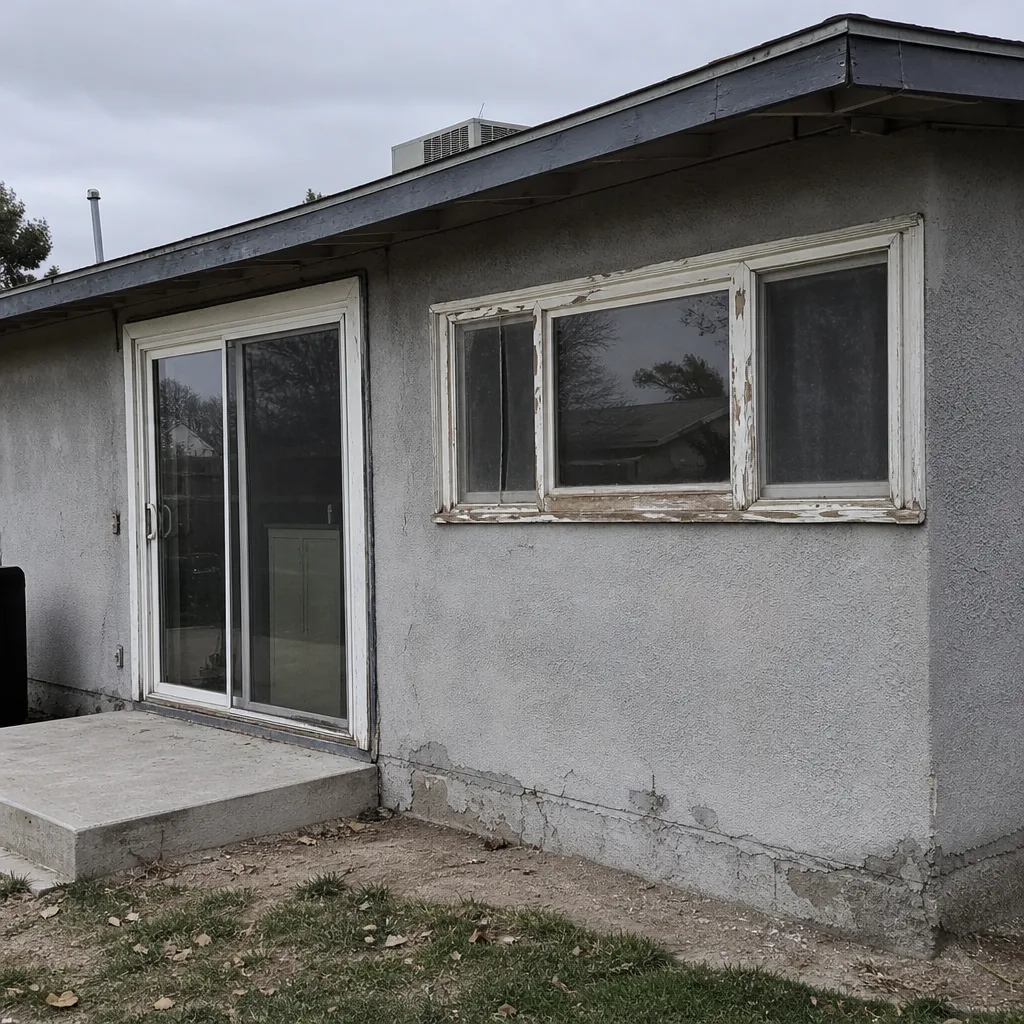 Before
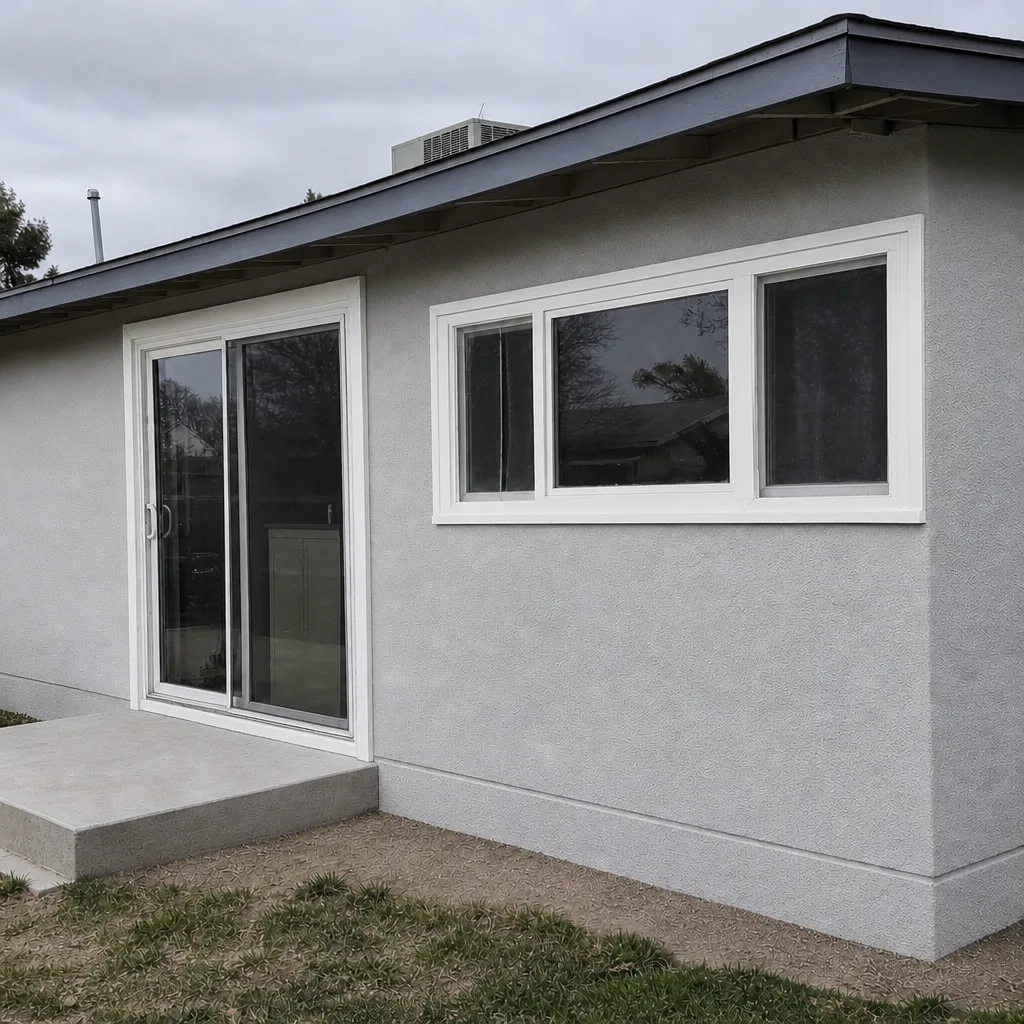 After
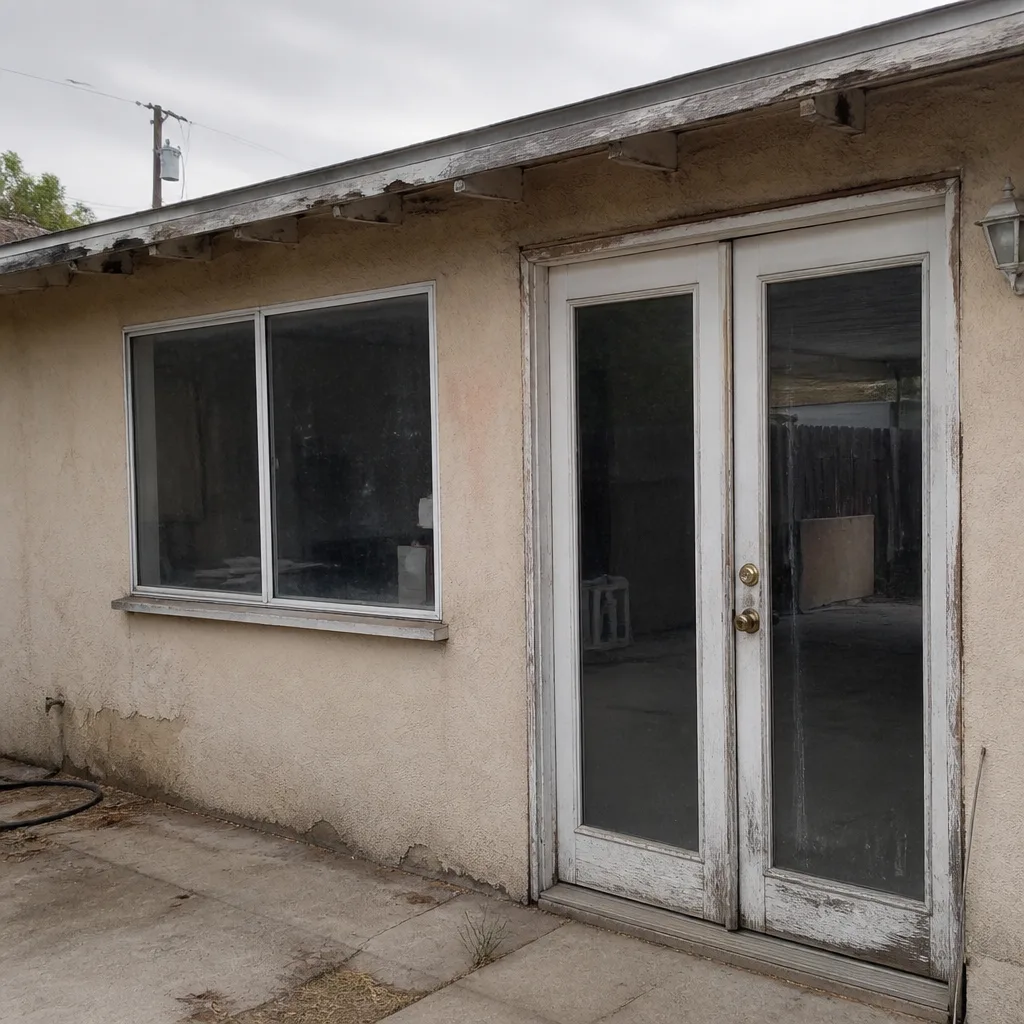 Before
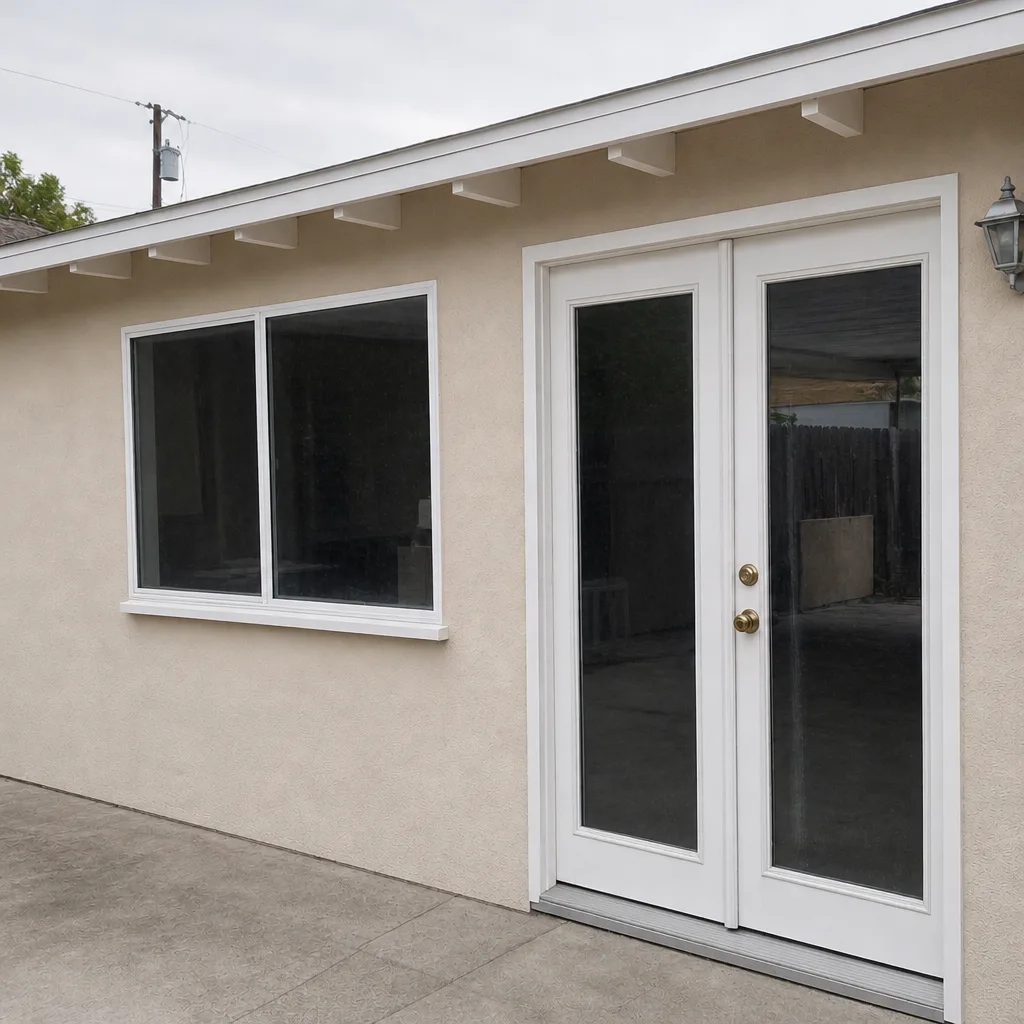 After
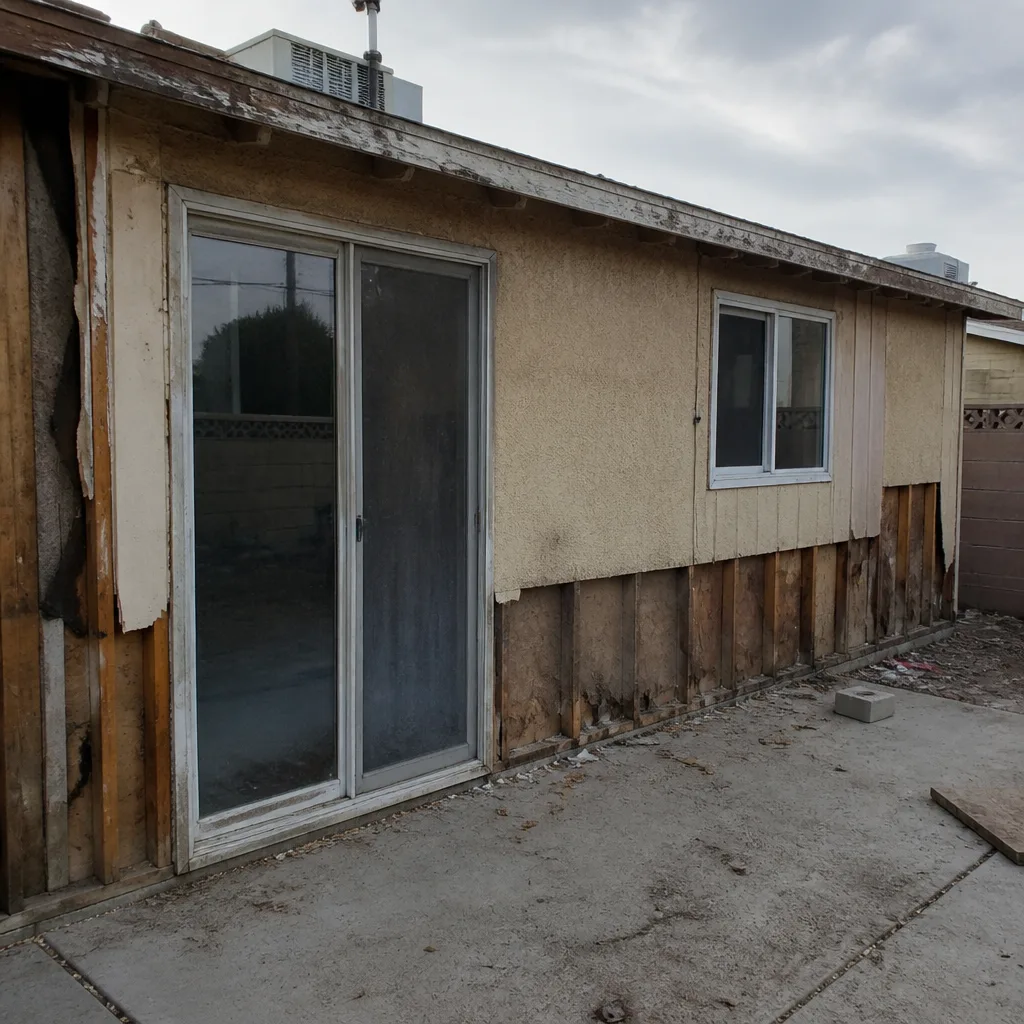 Before
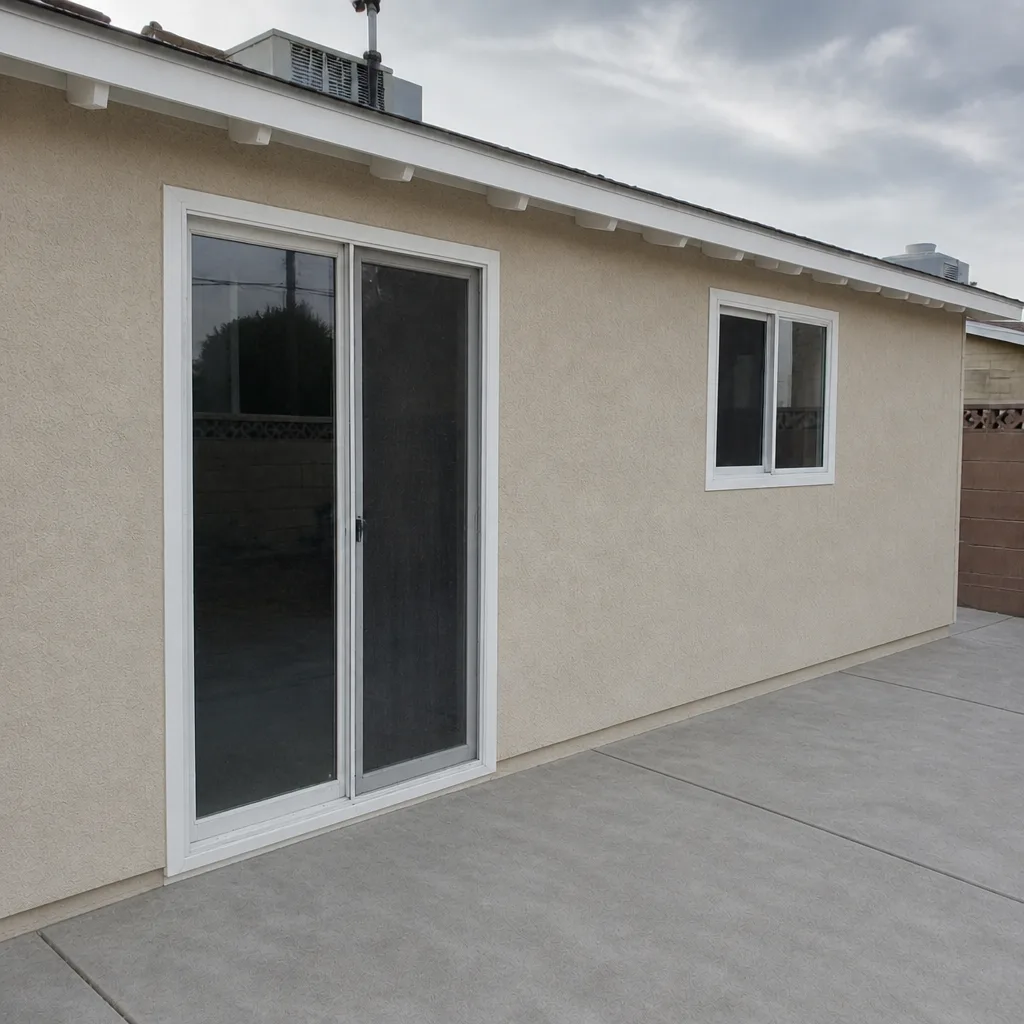 After
When to Call a Professional
Some jobs are homeowner tasks and should stay homeowner tasks: a flashlight check, a fresh bead of exterior sealant, clearing a weep hole, replacing a door sweep. Those are the things anyone can do in 20 minutes on a Saturday. But there are specific situations where a pro needs to be on the site, and calling early is cheaper than calling late.
Call us when you see interior water marks near a window or door and can’t find the source; when a frame has visually bowed or a door won’t latch without lifting; when sealant separation keeps returning in the same spot every winter; when the decorative door glass insert is hazing or milky along the edge; or when a storm-season leak is recurring in the same window after multiple temporary repairs. Those are the triggers for a full assessment, not a patch. Winslow Windows & Doors Sunrise Manor offers free estimates in Sunrise Manor, and every assessment comes with a written line-item quote and a published address and license behind the work. Call (844) 761-9603 to schedule yours.
Frequently Asked Questions
Twice a year is the right baseline: once in May or June before monsoon season, and once in October after it. That’s because Sunrise Manor’s wet season is July through September, so the sealant gets tested exactly when you don’t want to find out about problems. Add a quick flashlight walk-around in January to catch winter thermal separation early. If you see interior water marks after any single storm, check that specific spot right away rather than waiting for the next scheduled walk.
It’s delamination of the laminated interlayer inside the decorative panel, driven mostly by unfiltered UV exposure in the desert sun. Once the interlayer starts to separate, the panel looks milky or yellowed around the edges and the delamination cannot be reversed – the insert has to be replaced. The best defense is checking the UV rating and inspecting the edges every spring before summer sun is on the panel. If the panel is already hazing, call (844) 761-9603 for a free estimate on a replacement.
Yes – through thermal cycling rather than cold itself. Temperatures that swing from a cold January night to a warm February afternoon flex aluminum-clad frames against glass thousands of times across a season, and the joints that take the most movement are the sealant corners and the frame-to-wall interface. The damaged result is the same as a cold-weather climate would produce, but the mechanism is diurnal swing, not deep freeze. That’s why the winter check is a flashlight inspection of sealant joints, not insulation work.
A temporary fix restores the sealant or weatherstripping enough to hold through the current season: a fresh exterior bead, a door sweep, cleared weep holes. A real repair addresses the underlying cause – a failing sill, a frame that no longer sheds water, an active leak inside the wall cavity. Anything that comes back in the same location after two storm seasons is a real-repair job. A short assessment in October, before the next monsoon, usually catches all of it at once.
Small sealant and weatherstripping repairs typically run in the low hundreds of dollars, and frame-level repairs or hardware replacement run higher. Because every home’s exposure is different, we give written line-item quotes instead of a single per-window price, and we don’t change the number once work starts. Free estimates are available – call (844) 761-9603 and we’ll set up a time to look at the specific window or door.
When the same window has leaked, warped or failed after more than one monsoon season, replacement is usually less expensive than repeated repair. It’s also the right call when frame integrity inspection shows the frame is bowing, the sill is not draining, or the decorative panel has delaminated. For a home in Sunrise Manor where the frame is still solid, the smaller repair is almost always worth trying first. For the full picture on where repair ends and replacement begins, our window replacement and impact windows pages are the right place to start.
The Bottom Line
Sunrise Manor’s climate doesn’t run on four seasons, and treating your windows and doors as if it does costs you real money. The whole game here is pre-monsoon prep in May and June, active monitoring through the July-to-September monsoon, a frame-and-hardware reset in October, and monthly winter checks to catch sealant separation from thermal cycling. The one spring task that saves the most money is inspecting the UV rating and edge condition on decorative door glass inserts before the summer sun gets to them. Do those tasks and your windows and doors last. Skip them and this climate finds the weak spots fast. If any window or door in your home is past the point of a homeowner fix, the only thing left is a proper assessment. Winslow Windows & Doors is locally owned, backed by the 36500-Day Done Right Promise, and a real person answers every call, 24 hours a day. Stop by our Winslow Windows & Doors Sunrise Manor home page or call (844) 761-9603 for a free estimate on any window or door in Sunrise Manor. We’re the one down the road – and we’ll tell you exactly what your home needs before anything starts.
Written by the team at Winslow Windows & Doors Sunrise Manor.